
Put a tunnel on the floor and most cats will have checked it out within the hour. Some race straight through it. Some sit just inside one end, waiting for something to walk past. And some simply move in and go to sleep.
That's no accident. A tunnel gives a cat three things they rate very highly: somewhere to hide, somewhere to ambush from and somewhere quiet to nap. Here's which cats get the most out of one, how to set it up so it actually gets used, and how to turn it into a proper hunting game.
Quick answer
Most cats like tunnels: they offer cover to hide in, a spot to ambush from and a place to nap. Put one where your cat spends time, keep both ends clear and drag a wand toy past the openings. Put string toys away after play, and see your vet if your cat starts hiding far more than usual.
Why do cats like tunnels?
Cats would much rather avoid trouble by running, climbing or hiding than by standing their ground. Vet guidelines on what cats need at home describe hiding as a coping behavior, and recommend giving every cat their own hiding places. A tunnel does that job well, with a bonus: it's usually open at both ends, so your cat can see out and leave whenever they like.
It's also a brilliant place to hunt from. Cats stalk by staying out of sight, then pounce, and a tunnel is the perfect blind. Cat welfare charities note that cats prefer to play where there are obstacles and hiding spots, and that pulling a toy through or around a box or tunnel makes playtime even more stimulating for a kitten.
And plenty of cats just sleep in them. Cats can spend at least 12 hours a day asleep, and a covered spot feels safer for a cat who's dozing.
Which cats get the most out of a tunnel?
Vet Dr Duncan Houston's answer is a short one:
Dr Duncan's advice: All cats.
Cats don't all use a tunnel the same way, though. A few patterns are worth knowing:
- Kittens and young cats tend to treat it as a racetrack and an ambush point.
- Shy or nervous cats often like having cover with a view, especially in a busy house or when visitors arrive.
- Indoor cats get somewhere new to explore and hunt from without going anywhere.
- Cats who share a home benefit from a tunnel with two openings, because nobody gets trapped inside, and it adds one more hiding place to the house.
- Older or stiff cats often do better with a low, wide tunnel they can walk into without crouching or stepping over anything. Vet guidelines suggest keeping hiding places low and easy to reach for kittens and older cats with limited mobility.
How to set up a tunnel your cat will actually use
Where you put a tunnel matters more than which tunnel you buy.
- Put it where your cat already hangs out. Against a wall, near where they sleep or where they like to watch the room from. A tunnel in a spare room is just furniture.
- Keep both ends clear. An opening jammed against the couch turns a tunnel into a dead end.
- Make it smell like home. Pop their blanket inside or on top, and leave a treat or two in the tunnel for them to find.
- Don't put your cat in it. Let them discover it on their own terms, in their own time.
- Give it time. Some cats move in on day one. Others ignore a new tunnel for a week or two, then claim it.
- More than one cat? Count your hiding places. The PURRZ™ tunnel pages suggest one hiding or resting place per cat plus one, and a tunnel counts as one.
How to use a tunnel in a play session
A tunnel turns an ordinary wand game into a proper hunt, because the toy can disappear.
Dr Duncan's advice: In a play session, use:
- Toys inside.
- Treats inside.
- A toy on a rod or a laser pointer, but with a laser, make sure they catch a toy at the end.
Some moves to try:
- Start at the opening. Drag a wand toy slowly across one end of the tunnel while your cat watches from inside. Then stop, twitch it and wait.
- Make it vanish. Pull the toy into one end and out the other, or around the outside, so your cat has to follow it or wait for it to come back.
- Let them ambush. Park the toy just past an opening for a few seconds. The pounce from cover is the best bit of the game for most cats.
- Roll a ball through. For cats who like to bat things, a ball rolled into the tunnel from the couch is a game in itself.
- Let them win, then food. Finish with a catch your cat can grab and bite, then a meal or a treat, so the game ends the way a real hunt would.
Keep it short. Cats are sprinters rather than marathon runners, so a few minutes of real chasing, a few times a day, beats one long session. For the wand moves themselves, see How to Play With a Cat Using a Wand Toy.
What not to leave out unsupervised
Most tunnels are fine to leave out as furniture. The risks are usually the extras that come with play.
Dr Duncan's advice: Don't leave toys inside. Tunnels can be left out for fun, but make sure the cat does not chew them, and they can be easily broken by scratching, depending on the material.
Here's what to tidy away or keep an eye on:
- Wand toys and anything on a string. Put the wand away after every game, including any toy left dangling into the tunnel. String can wrap around a cat, and swallowed string can bunch up the intestines and usually needs surgery.
- Toys that are coming apart. Retire a wool ball that's unraveling, and take the balls away from a cat who eats the wool rather than batting it.
- Loose parts. Check tabs, studs and connectors after you build, move or clean a tunnel, and fix or remove anything small enough to swallow.
- Chewing and eating. Tearing at cardboard or pulling at felt is normal play. Eating it isn't. If your cat swallows cardboard, felt or wool rather than just shredding it, take that tunnel or toy away and talk to your vet, because some cats regularly eat things that aren't food and this can block the intestines.
If you think your cat has swallowed string, wool or part of a toy, or they vomit, retch or stop eating after play, go straight to an emergency vet and don't wait for it to pass.
When a tunnel cat starts hiding more
A cat who loves their tunnel is normal. A cat who suddenly spends most of the day in it is a different story.
If your cat starts hiding much more than usual, book a vet check, because cats often hide more when they're stressed or unwell.
While you wait for the appointment, leave them be. Coaxing or pulling a hiding cat out can make them more anxious and keep them hiding for longer.
Common mistakes
- Putting your cat inside it. A tunnel works because your cat chose it.
- Judging it on day one. Plenty of cats take a week or two to decide a new tunnel is theirs.
- Leaving the wand in the tunnel. Every game ends with the wand back in a drawer.
- One tunnel for three cats. More hiding places means less squabbling over the good one.
Picking a tunnel
Here's what each PURRZ™ tunnel page lists.
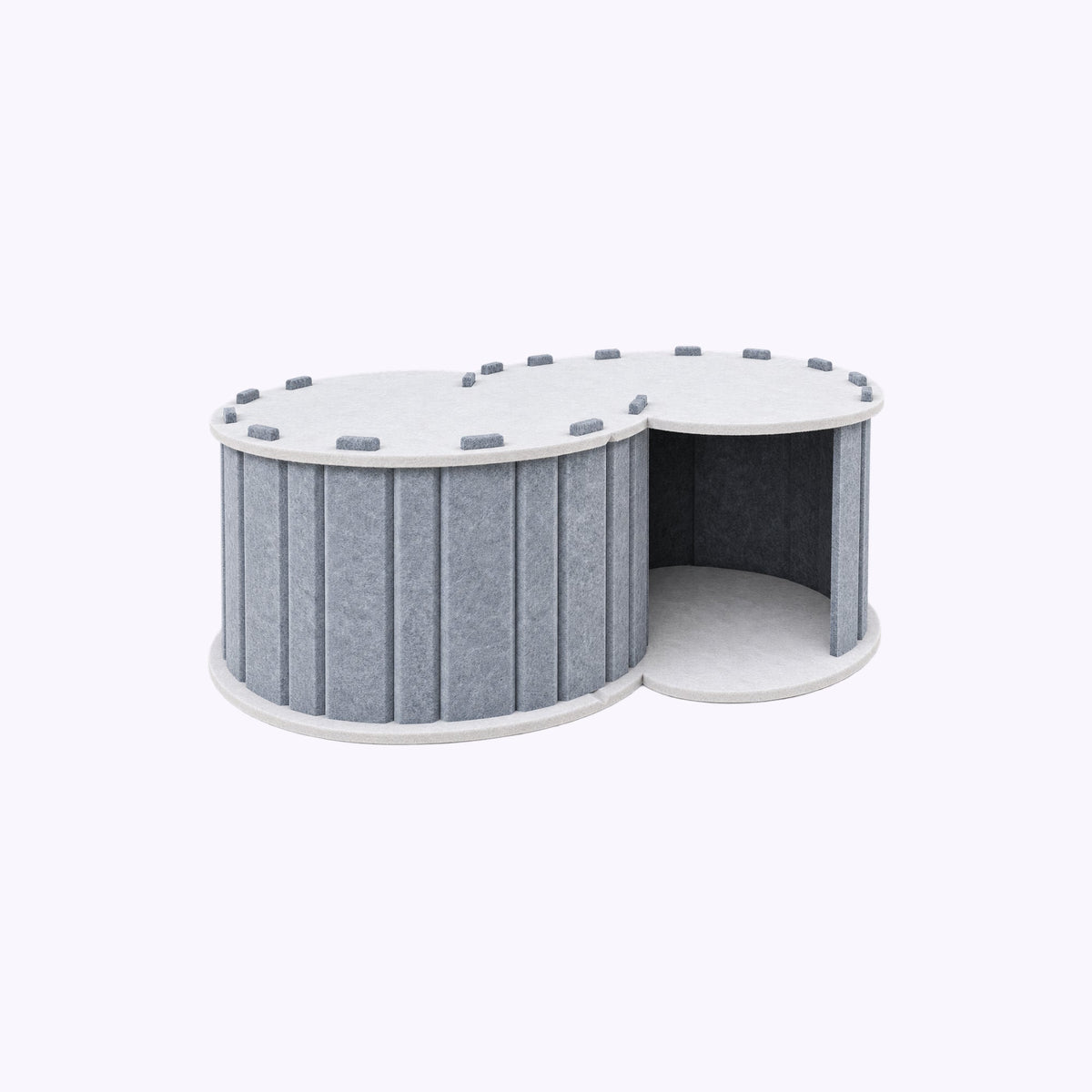
- PURRZ™ Sneak & Slay Tunnel. A gray felt tunnel in an S shape: two joined chambers with an opening at each end and a flat lid on top that a cat can sit on. It measures 58 x 40 x 24 cm (23 x 16 x 9 in) assembled and goes together without tools. The page says one cat curled up under about 35 cm (14 in) from nose to tail base fits inside a chamber, and a bigger cat takes the lid.
- PURRZ™ Petal Paws House. A low felt house shaped like a flower, with two doors at floor level and no step, "so it is a tunnel through", a closed pocket at the back to hide in and a deck on top. It measures 70 x 70 x 28 cm (28 x 28 x 11 in), "low enough to go under a coffee table", and the page says it "lets two cats use it at once, one in and one on top".
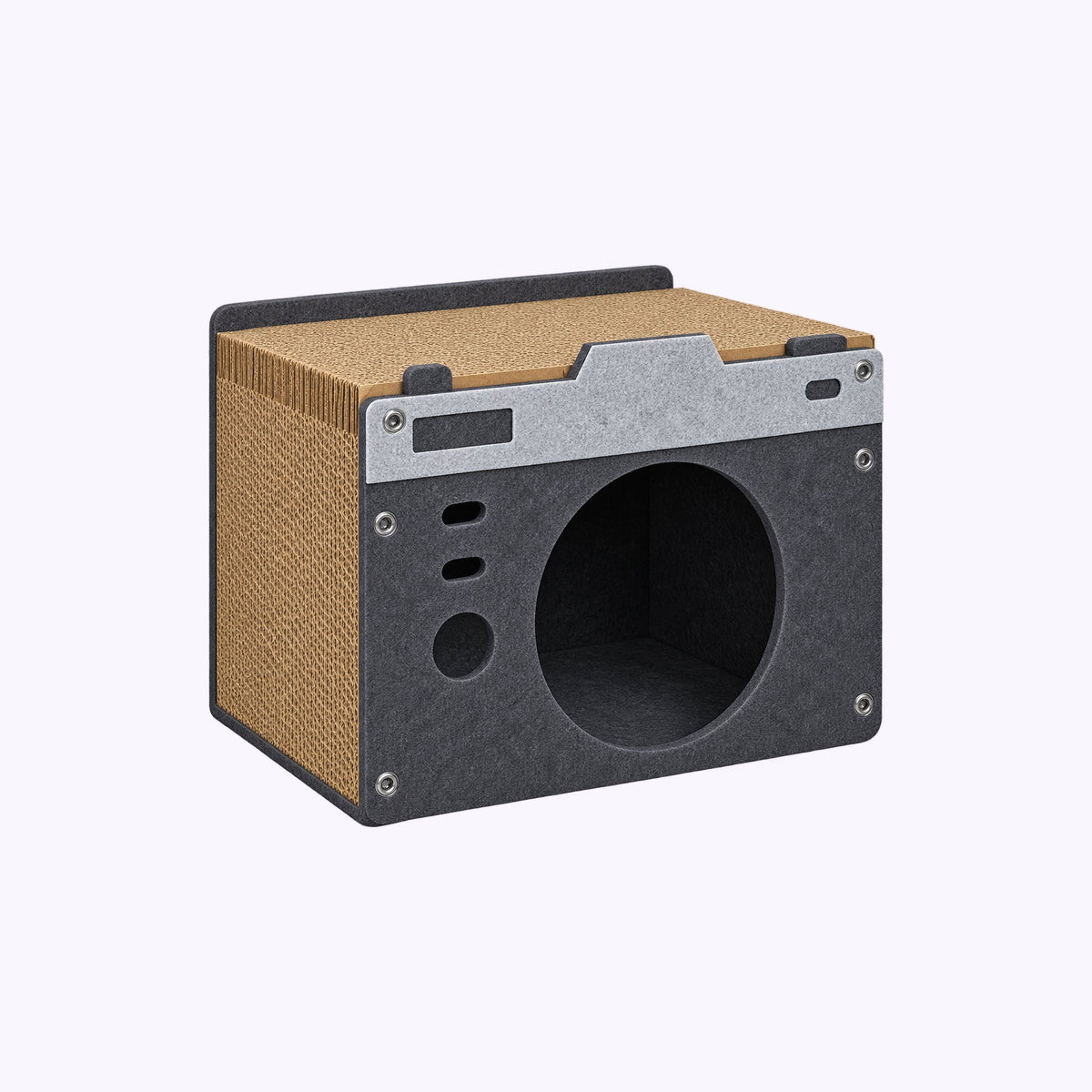
- PURRZ™ Giant Cat Tunnel, Scratcher Lounge and Wool Ball Set. An open-ended tunnel in double-wall corrugated cardboard, 60 x 34 cm (24 x 13 in) inside and 39.5 cm (16 in) high, with an oval scratcher lounge and four wool felt balls. The page says "two cats can use the tunnel at once from opposite ends", and that "Shreds are the product working."
FAQs
Do cats like tunnels?
Most do. A tunnel gives a cat cover to hide in, a place to ambush from and a covered spot to nap, all things cats look for anyway. Some use it every day; others save it for when visitors arrive.
Can two cats share a tunnel?
Some will happily share, and a tunnel open at both ends means neither cat gets cornered. Don't rely on one tunnel for everyone, though. Give each cat their own hiding places, plus one spare, and never push two cats into the same space.
Why won't my cat use their tunnel?
Usually it's the spot, the smell or the timing. Move it to where your cat already spends time, keep both ends clear, add their blanket and a treat, and give it a week or two. Dragging a wand past the opening often does the rest.
Is it OK if my cat shreds a cardboard tunnel?
Yes, shredding is part of the fun, and cardboard tunnels are made to be scratched. Vacuum the shreds and keep it dry. Once it's scratched through, it's done its job. The one thing to watch for is eating: a cat who swallows cardboard rather than tearing it should lose access to it, and your vet should hear about it.
Keep going
A tunnel is one of the simplest ways to give an indoor cat somewhere to hide, hunt and nap. Put it where your cat already lives, make it part of your play sessions and put the string toys away afterward. Your cat will take it from there.
For more on setting up hiding spots, play and safe high places at home, and when a change in your cat's behavior needs a vet rather than more toys, read How to Create the Perfect Indoor Paradise for Your Cat on ASK A VET™.
Recommended by Dr Duncan
Designed by Dr Duncan Houston for what you have just read about.
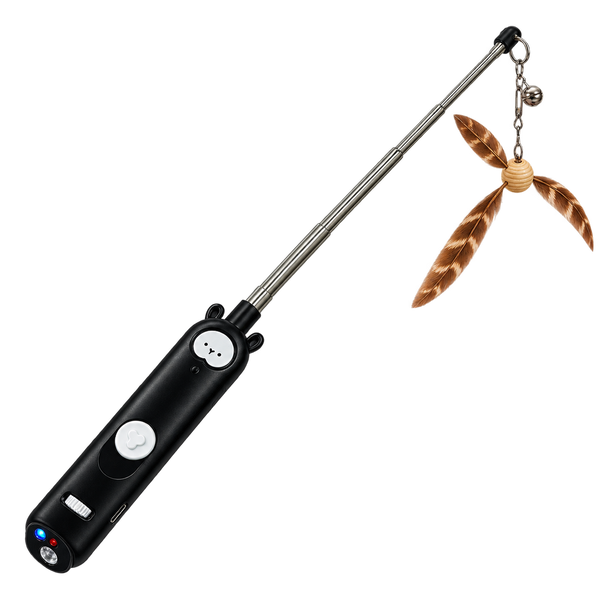 Teddy Multi-Use Laser ToyShop
If you’ve got an indoor cat, you already know the truth: they need more than…
 Cockatoo Bird AttachmentsShop
Some cats don’t want “a toy”
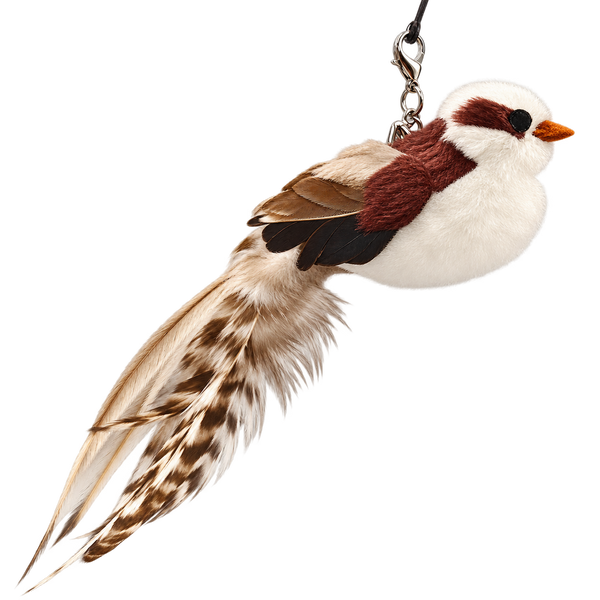 Kookaburra Craze Bird Attachments With Natural Bird FeathersShop
Some cats want a toy